
symbiotic virality

“Do you believe we are in a goondemic?”
I remember the question striking me as flippant. We were an hour into the forum—crowded by Berkeley standards—and all the other students had been asking more interesting, earnest questions about language or algorithms.
I suppose I could have answered literally, or come up with my own glib response, but the topic was out of scope and I didn’t want to embarrass the professor sitting next to me. I chose to salvage the moment by broadly answering about how “gooning” was evolving into a metaphor for “wasting time.”
Following the event, the student came up to greet me. He introduced himself as Steve, shook my hand, and thanked me “for the clip” with a sheepish grin. I was still somewhat confused until a few hours later, when a video of our interaction began going viral on TikTok.
The entire question had been a setup, recorded from the start without my knowledge. Steve had deliberately interrupted our academic discussion to say something provocative for online likes and views.
Going through his social media, I realized this was a pattern: Steve had built up a followership of several thousand by asking random celebrities and strangers unprompted questions about gooning. I felt used.
In the grand scheme of clip farming, of course, this was relatively inconsequential. I’ve previously written about “rizz influencers” who film unsuspecting women for their pick-up videos, and Louis Theroux just released a fantastic documentary analyzing how manosphere influencers foment controversy just to build internet clout.
But all of these examples have one important thing in common: they somehow “cash in” on another person’s prestige (be that money, influence, attractiveness, or newsworthiness) for their own advantage.
I’m reminded of the philosopher Daniel Boorstin, who argued that celebrities are “human pseudo-events,” famous for being famous. The more relevant someone is, the more other people will try to demonstrate adjacency to that individual, which makes everybody appear more popular. It’s smart to cast a trendy actor for a blockbuster movie, because the movie will sell more tickets, but that inadvertently makes the actor even more trendy. The same is true on social media, which is why influencers do “collabs” with one another: they are symbiotically helping each other go more viral.
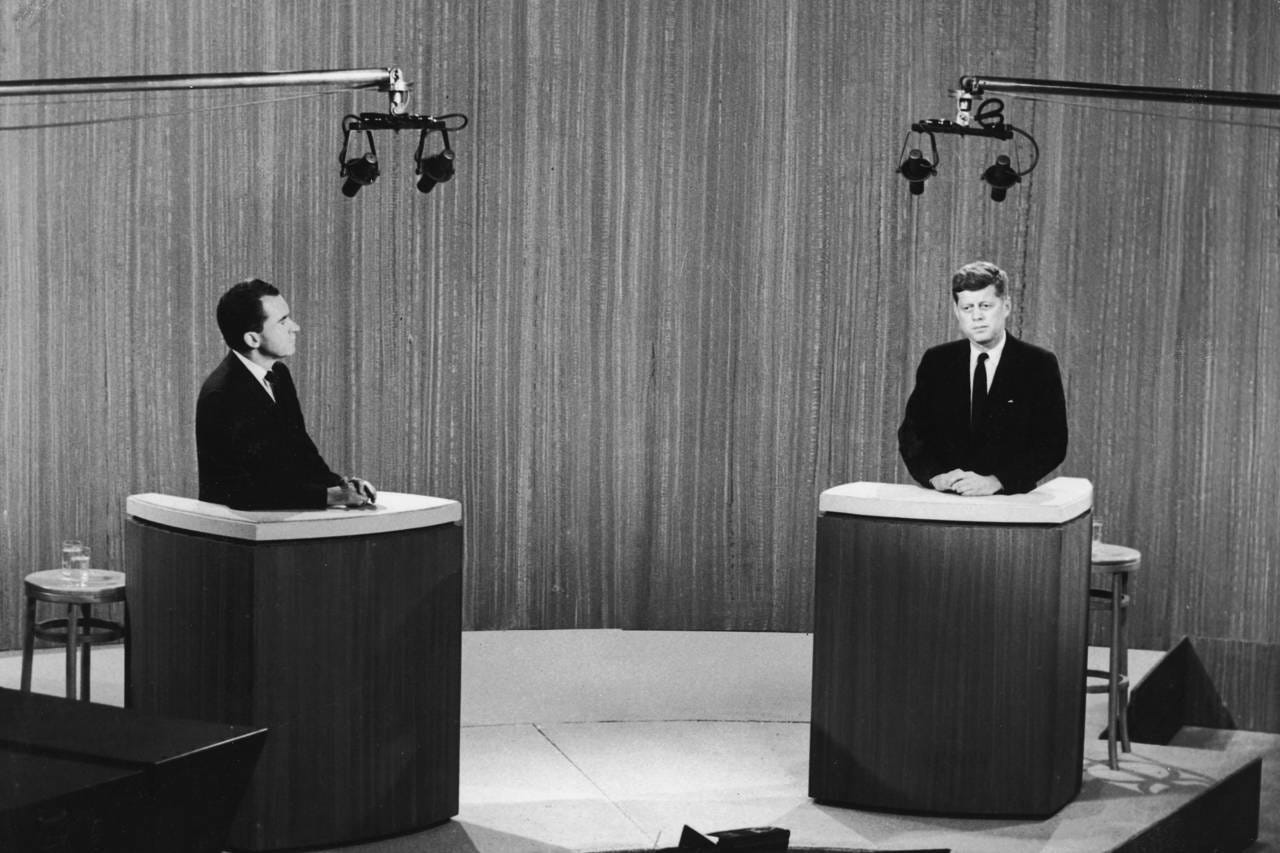
If I were to expand on that, I’d note that there are two distinct ways by which you can cash in on someone’s popularity: parasitism1 or mutualism.
A mutualistic pseudo-event is closer to Boorstin’s definition, and the lesser of two evils. When I was marketing my book Algospeak, I got interviewed by several newspapers and TV shows. These outlets only talked to me because I was relevant enough for their audiences to pay attention, but in exchange I became better known to those audiences. We both benefitted from the relationship.
That’s not to say mutualistic virality is good for society. Louis Theroux highlights how redpill “alpha males” and OnlyFans models mutually benefit from appearing in each other’s videos: the alpha males get to be seen around attractive women, while the models are able to convert some viewers into subscribers. This relationship is beneficial to the individuals involved, but spreads misogyny and porn addiction to the rest of society. (Maybe the goondemic is real.)
A parasitic pseudo-event, meanwhile, happens when only one person benefits from the interaction. Tabloid paparazzi were an early example, while stream snipers are their algorithmic equivalent. Celebrities and influencers do not want to associate with these people; their lives are hijacked for someone else’s gain.
In some cases, influencers do tolerate these one-sided relationships: Clavicular has notably turned many stream snipers and swatting incidents into free content. These interactions, while closer to commensalism, are still nonconsensual. I actually reposted Steve’s TikTok video onto my YouTube channel and got a million views, so it was technically good for me, but it still felt extractive.
That’s because, if the underlying mechanism of symbiotic virality is to siphon off relevance from another person, it necessitates treating them as a means rather than an end. The entire point of the interaction is about how you can use someone else for your own online fame.
I appreciate the irony of me commenting on this as an influencer, and you’re welcome to form your own opinions about that, but I believe it’s still possible to communicate meaningfully online. The difference is intent: are we doing things just to go viral, or is there a deeper purpose?
The point of communication is literally in the word—to build community, where we treat other people like they matter. If the end goal of social media is to build interpersonal connections, rather than make content for its own sake, then we can still use a medium for good. Otherwise, we’re letting the medium use us instead.
I’m excited to announce that I’m officially writing a new book with Bloomsbury USA! The working title is Reality Drift and it should come out in fall 2027—stay tuned for more details down the line.
I’m also hosting a mass reading of Howl by Allen Ginsberg in Washington Square Park this May 4 at 5 pm. More information to follow.
Slightly different from my previous definition of “parasitic virality,” although both are extractive ways of getting more popular online.
I think the problem of treating people as a means to an end is something that social media as it exists rewards, and why media analysis for social media content should start with "why was this recorded?"
that question changes a lot of things. with that question, you realize that the "autism mommy" account is just exploiting their disabled child for views by filming a meltdown instead of trying to comfort their kid. arguments that get filmed go from someone being aggressive to questioning whether the behavior we're seeing is warranted based on what happened BEFORE someone pulled out a camera.
I think this also where the rise of "I don't owe anyone anything" individualism comes from, because that kind of selfishness enables you to use other people as means to an end, not independent people whose opinions, feelings, etc. you have to take into account.
I think what you're describing can be linked to the dialectical relationship of legitimacy in general.
Harvard is considered a university of social-cultural capital Harvard because of the social-cultural capital of its alumni. One legitimizes the other but also vice versa. What happens if this isn't the case? Well, see for example the similar ever so controversial legitimacy-instution we call the Noble Peace Prize. (There's some STS research on this in relation to science awards, but I can't find it rn.)
Now, when this is a case of legitimacy, meaning a socially mediated phenomena - similar to what Bourdieu or (what I assume your picture is referencing to) Neil Postman faces in their respective books on television - there can be violation of social ethics that can be fought against by raising awareness among the legitimacy-perceiving-granting public. You can appeal to a possible better community, or, to recall one of the recently obituaried German philosophers, a public sphere.
However, I don't think this is as much of a problem on these new forms of algorithmically complex media. What legitimized a figure like Andrew Tate? Isn't his viral power more akin to the sky-cars that drive on custom GTA maps? Is socially mediated legitimacy the issue here?
But who am *I* to say anything on the topic!